
AssetStore Design Vision
LEAD PRODUCT DESIGNER
RESPONSABILITIES
Lead the design team responsible for the Unity Asset Store, a marketplace widely used to buy and sell game assets and plugins.
WHAT IS UNITY?
Unity is a mobile leading game engine company renowned for its versatile Unity Engine, widely used by developers to create interactive experiences across various platforms.
Challenges
Context: The Unity Asset Store, after 14 years of operation, was burdened by fragmented backend systems spread across countries - results from incomplete restructuring projects.
Business Proposal: Initially, the business proposed a backend overhaul, focusing solely on technical systems without addressing the platform’s 4 years of UX debt causing major user pains.
Design Team's Challenge: The design team needed to counter this approach with a data-driven user-centered perspective, advocating for a comprehensive redesign that aligned with the long-term business vision while addressing critical usability issues.
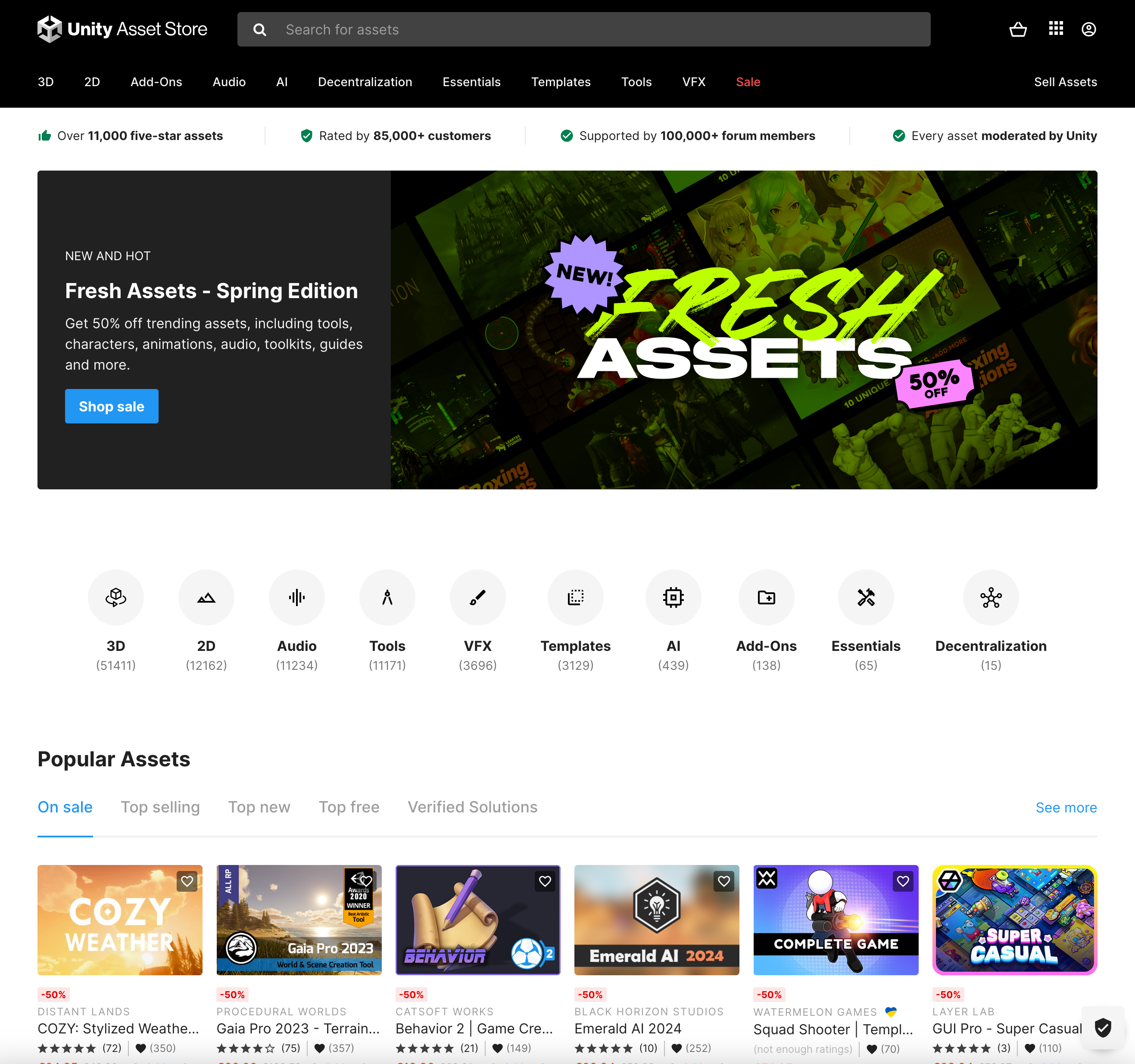
Unity Asset Store in 2022
The Approach
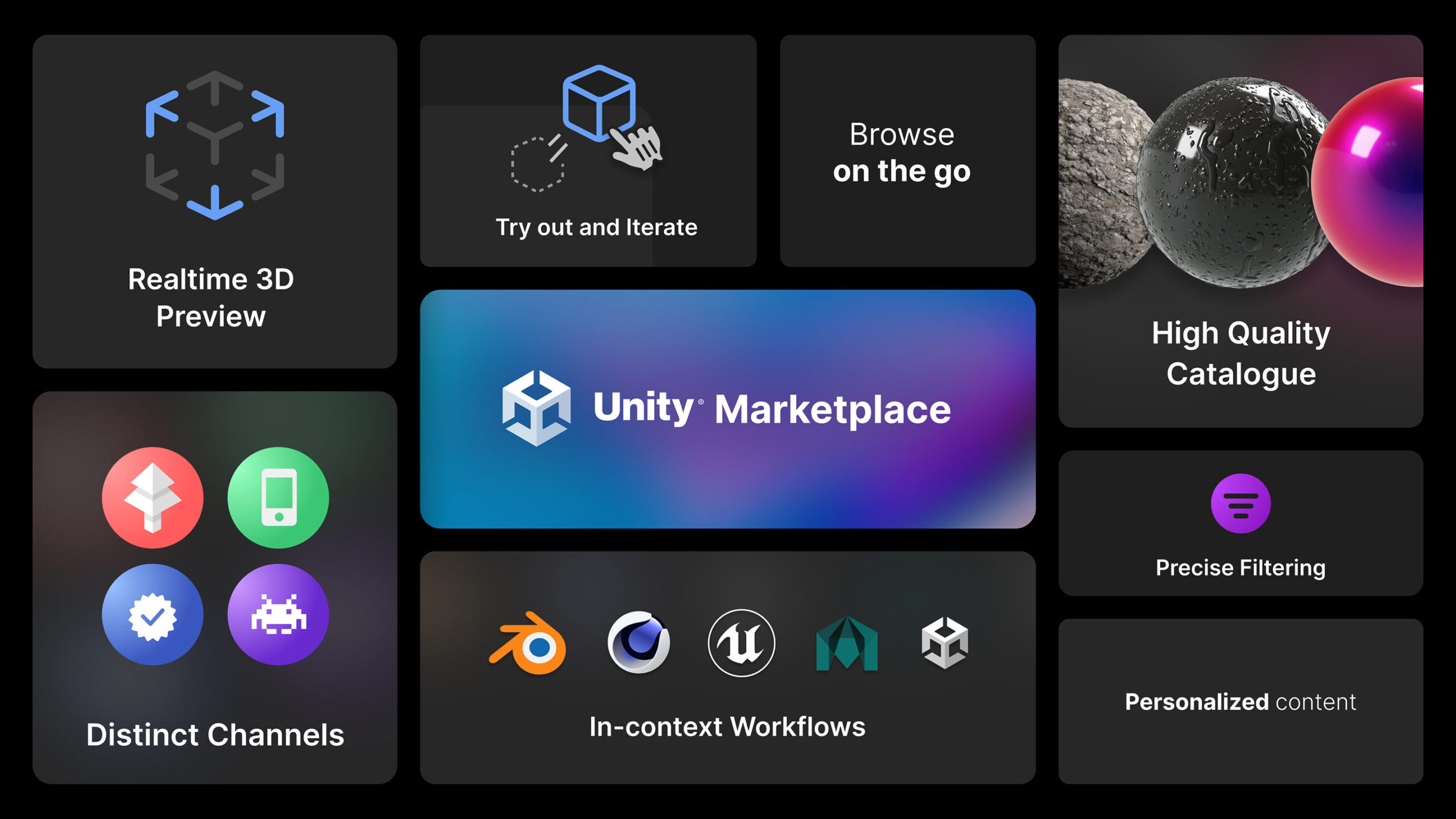
Recognizing the need for a comprehensive approach, I led an initiative to craft a Design Vision that would serve as a guiding framework to secure stakeholder buy-in, address the UX debt, and elevate the platform to a new level of excellence.
This vision was carefully aligned with the overarching business strategy for the Asset Store, which aimed to break free from the constraints of the Unity Editor and evolve into a universal marketplace.
Data Collection
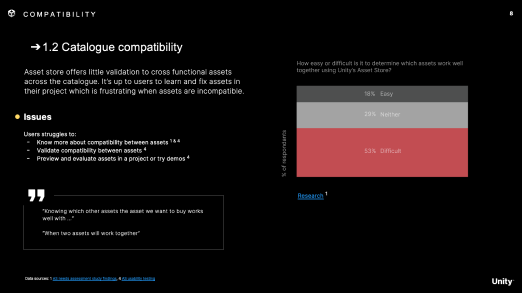
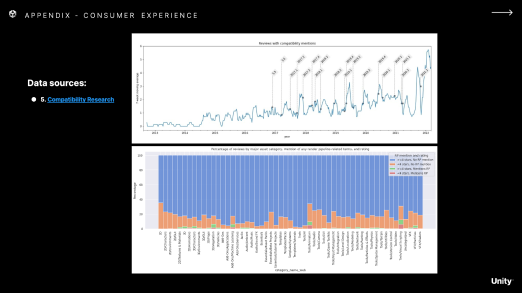
The project began with an extensive research process, starting by collecting all the data and user feedback accumulated over the past couple of years.
To build awareness and gain stakeholder alignment, we conducted a roadshow, presenting the findings and highlighting key opportunities for improvement.


Design Vision
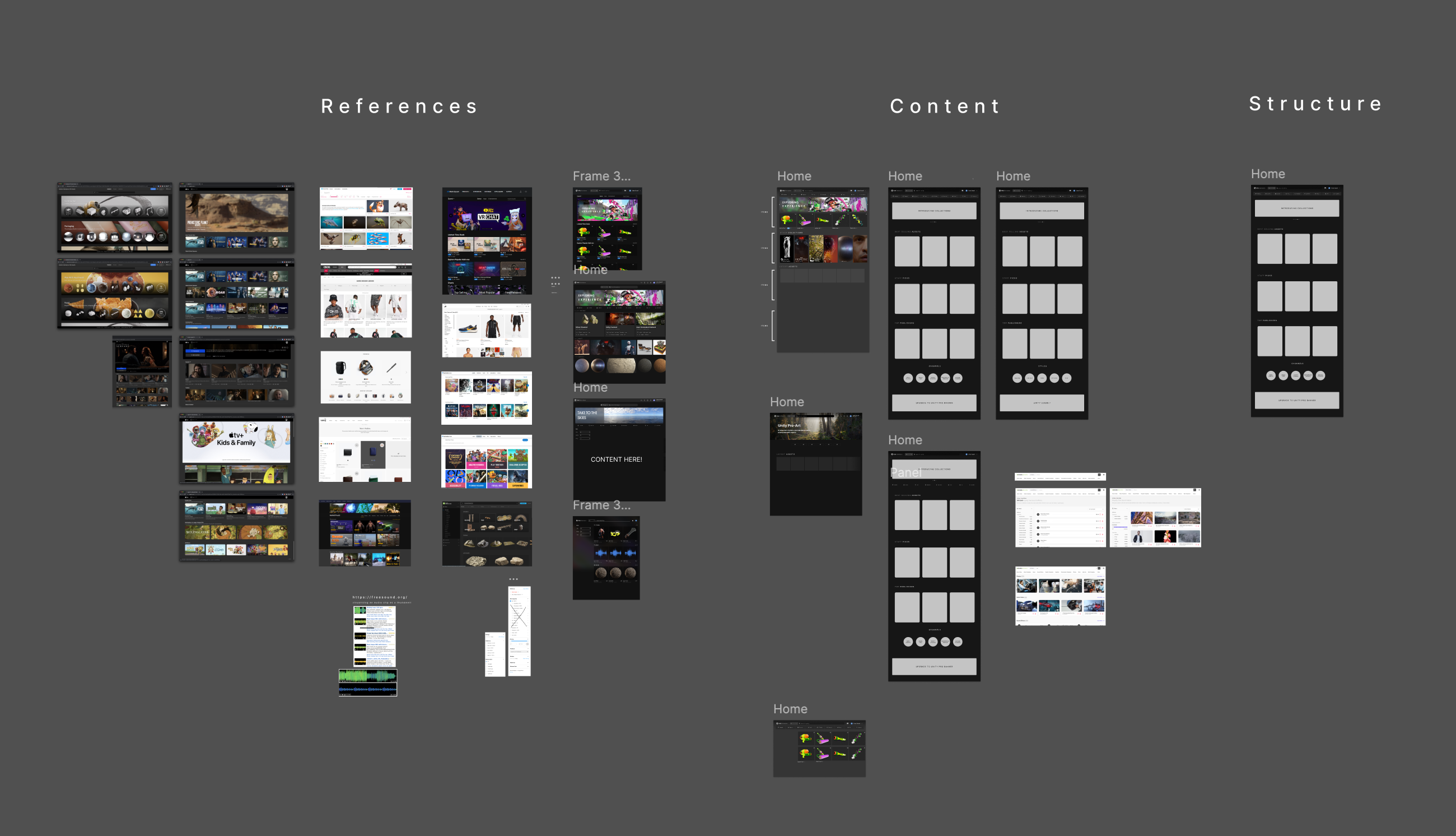
After a successful data-driven roadshow highlighting major user pain points, the next step was to assemble a team of designers for a three-month initiative. This effort aimed to address the identified user issues while also exploring ways to expand the Unity Asset Store's functionality to align with business goals—ensuring these changes enhanced, rather than compromised, the user experience.
Competitive Analysis

Design Exploration
Vision Trailer
To make the vision easy to share internally, we created a hype concept trailer that effectively conveyed the potential for the Asset Store's expansion in a concise and engaging format. A hype trailer is typically used to promote features of new products that have yet to be developed, capturing the excitement and possibilities in a digestible way.
But the work was far from complete. To bring this vision to life, it was essential to implement a structured design process—one that would empower the team with the tools and framework needed to successfully tackle this ambitious project.
Design Process
When I joined Unity, there was no clear design process to shield the team from the four project managers across different departments who would approach designers directly with tasks. This lack of a prioritization system led to frequent conflicts and eventual team burnout.
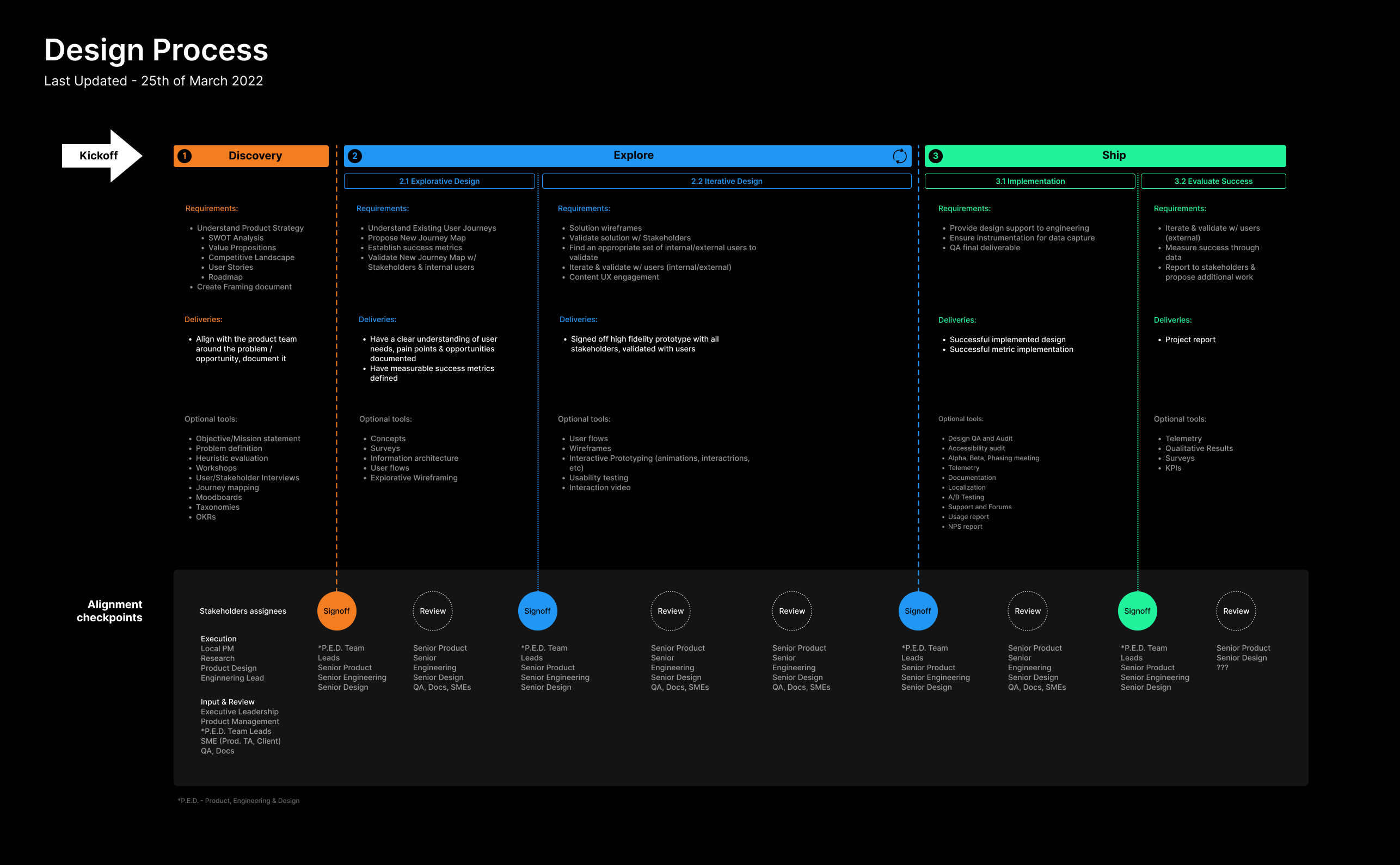
At the time, the company did not have a unified design process. To address this, I gathered the various processes being used and consolidated them into a single, cohesive framework.
Jira screenshot 2023
Implementation
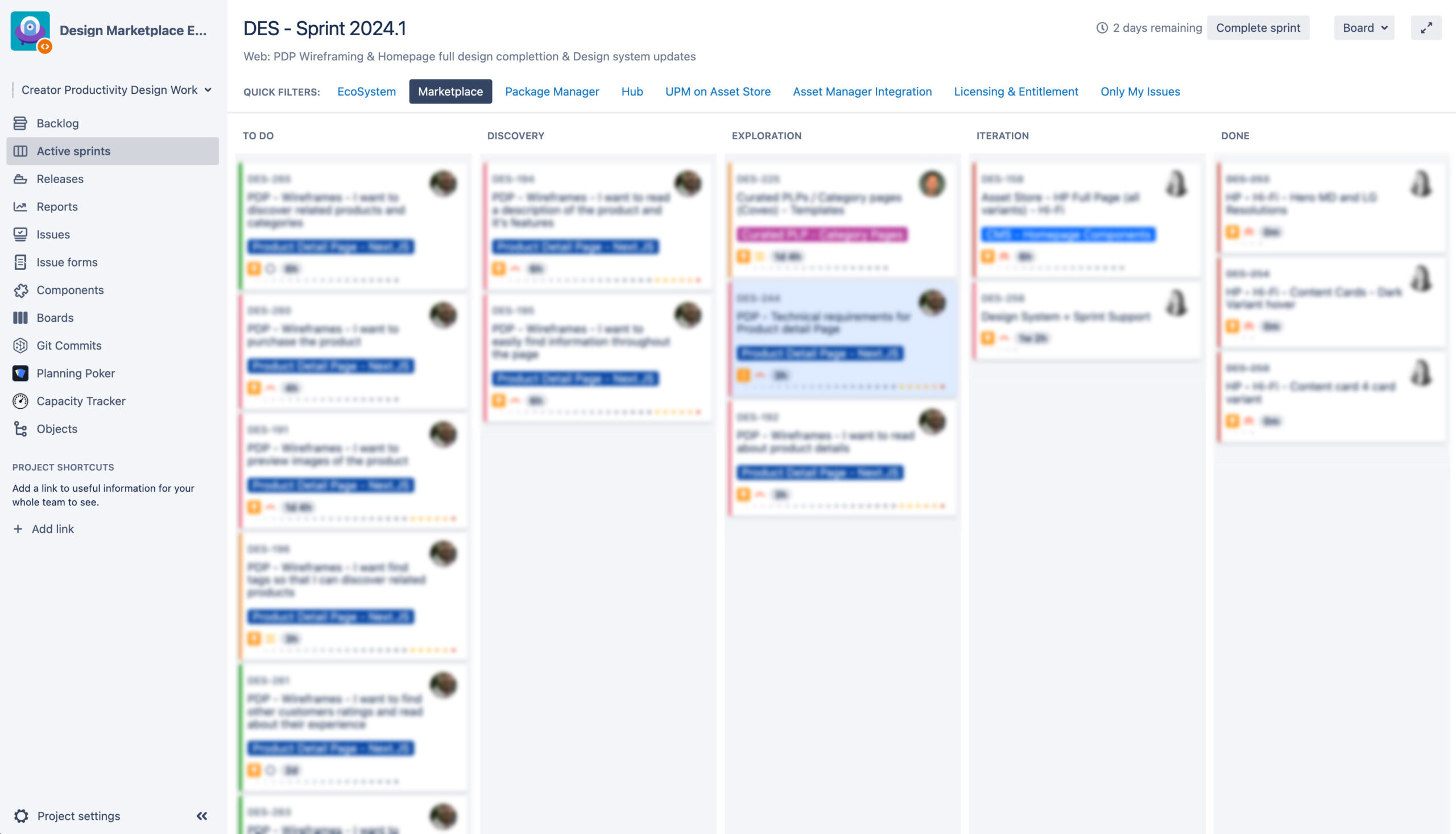
This unified process was later implemented in the Design Jira board to ensure all tasks were seamlessly synchronized with engineering.
Once a project was marked as 'Done' in design, it automatically transitioned to the engineering board for development and eventual release.
Results
35%
Implementing a Design Process resulted in 35% increase in productivity in the team.
Good to go
Design Vision was shared internally with praise, resulting in the project being approved.
20%
Increase in team satisfaction after the introduction of a Design Process.
2025 © danielsimon.dk